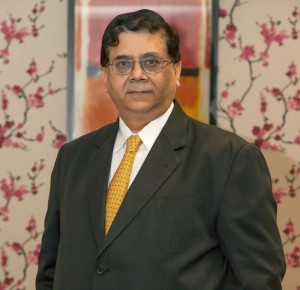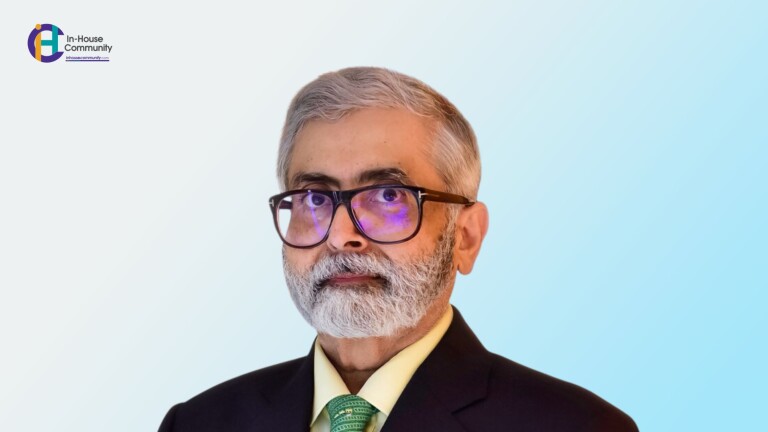

From London and The Hague, to Singapore and Hong Kong – Liu leverages on his international experience as he forges a new path as independent arbitrator
1. Can you please share with us a little of your background prior to joining the Hong Kong International Arbitration Centre (HKIAC), and what your time spent there was like?
I started my career at the Singapore International Arbitration Centre. I then did two internships at the High Court of Hong Kong and the Permanent Court of Arbitration in The Hague. After completing the internships, I joined Allen & Overy (A&O)’s Hong Kong office as part of their Global Arbitration Group. During my time at A&O, I was appointed as a member of the HKIAC Rules Revision Committee which was tasked for with drafting the 2013 HKIAC Administered Arbitration Rules. With that experience, I joined the HKIAC in 2014 and began my eight years of journey at the institution.
I had a hand in many aspects of HKIAC’s operations including case management supervision, rules drafting, corporate governance and business development. There was no fixed description of my role at the HKIAC and my work every day was different and interesting. I spearheaded many of the HKIAC’s initiatives and drafted some of their practice notes and guidelines. It was an invaluable opportunity to gain insights on the institution’s internal management and practice and to work with many talented people.
2. What prompted your recent move to being an independent arbitrator and how have you found the transition thus far? Can you tell us a little about your new practice?
Having worked in private practice and arbitral institutions, and acted as tribunal secretary in numerous cases, I wanted to start a new career as an independent arbitrator. I have a lot of experience working with very senior and experienced arbitrators and have seen how they manage proceedings and tackle complex issues. I think I now have sufficient experience to run cases and determine disputes as an arbitrator.
I am fortunate to have received a lot of support and blessings from my family, friends and colleagues for my transition into an arbitrator. I have been travelling since I left the HKIAC and been enjoying the flexibility of my new role.
I accept appointments as an arbitrator or domain name panelist. I have experience in disputes under a variety of agreements including sale of goods contracts, share purchase agreements, shareholders’ agreements, joint venture agreements, banking and financial documentation, manufacturing and distributorship agreements, energy contracts and investment contracts under multiple governing laws. I am able to run proceedings in English, Chinese and both languages.
3. You were with the HKIAC through the peak of the global COVID-19 pandemic. In your estimation, has it had any impact (temporary or lasting) on international arbitration practice?
The COVID-19 pandemic has had a profound impact on international arbitration practice. Although the recent relaxation of travel restrictions in most countries may have reduced the impact to some extent, some of the procedural adaptations may outlast the pandemic.
I think the most obvious impact is the wider use of technology in arbitration. Various technology tools have been used in response to challenges presented by the pandemic. The most notable change I have seen is the increased use of virtual hearings for more cost-efficiency and greater procedural flexibility. At the beginning of the pandemic, there was a degree of scepticism towards virtual hearings among some parties, counsel and arbitrators. As the pandemic-related restrictions have forced users to explore alternatives to in-person hearings, there is a clear shift in attitude towards using virtual hearings for both procedural and substantive hearings.
Arbitral institutions, arbitrators and practitioners have also shown a desire to embrace other technologies including electronic filings, electronic bundles, online document storage and technology-assisted document review. Multiple practice notes and guidelines have been published to encourage the use of technology and to address due process and data protection issues in arbitration.
Against this background, I expect international arbitration to be more streamlined and paperless with greater use of technology and reduced environmental impact in the years to come.
4. What are some common disputes that you have witnessed arising from the pandemic?
The pandemic has led to business interruptions in various sectors and given rise to a range of new disputes. I have seen COVID-19 being invoked as the basis for running certain legal arguments or relying on certain contractual provisions.
Material Adverse Change (MAC) clauses have been particularly relevant to M&A transactions. Buyers may seek to invoke the MAC clause to renegotiate certain terms of the contract before completion. There have also been disputes concerning best or reasonable endeavour clauses. A common question arising under such clauses is whether a failure to perform in light of difficult COVID-19 induced conditions is excusable if the contract only requires best or reasonable endeavours.
The issue of illegality in the necessary place of performance may also arise in the context of the pandemic. A party may argue that its performance can be excused since performance becomes unlawful under COVID-19 related emergency legislation in the necessary place of performance. COVID-19 has also commonly been invoked as part of force majeure arguments to seek suspension or extension of time for performance or even termination of the contract. In some cases, the doctrine of frustration has been invoked on the basis of a significant change to a mutually agreed state of affairs, without fault on either side, leading to the impossibility of agreed performance or mutual purpose.

COVID-19 may affect the calculation of damages as well. One question arising there may be that should damages be assessed at the date of the breach, hearing or award, or another date? The determination of the appropriate date for assessing damages may have enormous financial consequences where a party presents claims based on Net Present Value or Discounted Cash Flow calculations which are highly sensitive to market projections.
Lastly, the pandemic has led to an increase in corporate insolvencies, making it relevant to consider the effect of insolvency on arbitrations involving insolvent parties.
5. Were you presented with any challenges in your work as an arbitrator during the pandemic?
Fortunately, the pandemic has not affected my work as arbitrator too much, as I launched my arbitrator practice at a time when I could travel again to many places without restrictions and I became used to remote working. While COVID-19 related arguments might have presented “new” challenges to many tribunals at the start of the pandemic, some arbitrators including myself have had more experience dealing with procedural and substantive issues relating to COVID-19.
I suspect that a possible challenge for me is that some users tend to think of me only for appointments in HKIAC or Hong Kong arbitrations. While I have handled many such arbitrations, I also have experience in disputes under other procedural rules (e.g., the ICC, ICSID, LCIA, SIAC and UNCITRAL Rules) and seated in other jurisdictions (e.g., London and Singapore).
6. As we get back to normalcy, what trends do you think we could expect from the arbitration scene in Hong Kong in future?
I foresee three key trends in Hong Kong arbitration.
More online arbitrations: Hong Kong introduced multiple initiatives to facilitate arbitral proceedings to be conducted online during the pandemic. These include the establishment of eBRAM to provide an online dispute resolution platform, the launch of the Hong Kong Legal Cloud for data storage services, and the HKIAC’s introduction of its virtual hearing services and Case Connect as a centralised online document management system. As Hong Kong continues build to its infrastructure to become a high-tech and innovation hub, we can expect more technology tools to be made available to support online arbitrations in Hong Kong. I think these tools are likely to receive acceptance by legal professionals in Hong Kong who have adapted well to working online during the pandemic.
More disputes with Chinese elements: Hong Kong has long served as a premier arbitration centre for China-related disputes and has benefited from several recent measures to strengthen this status. In particular, the arrangement on court-ordered interim measures and the supplemental arrangement on mutual enforcement of arbitral awards between Hong Kong and Mainland China provide a strong incentive to select Hong Kong as the venue for disputes with Chinese connections. In addition, wholly-owned Hong Kong enterprises (WOKEs) in Qianhai, Shenzhen can now agree to use Hong Kong law in civil and commercial contracts even in the absence of foreign elements under a pilot scheme. It is anticipated that this scheme will be extended to cover the entire Greater Bay Area to enable WOKEs to adopt Hong Kong law and choose arbitration seated in Hong Kong for contracts and disputes without foreign elements. With these arrangements in place and Chinese parties’ general acceptance of Hong Kong as a seat of arbitration, I expect to see more disputes involving Chinese parties or overseas entities controlled by Chinese companies to be arbitrated in Hong Kong.
More funding options: Hong Kong has recently passed a bill to permit certain agreements between clients and their lawyers using outcome-related fee structures for arbitration and related proceedings. Once the bill becomes law (possibly later this year), lawyers may charge for arbitration-related work on the basis of three types of arrangements, namely, conditional fee agreements, damages based agreements, and hybrid damages based agreements. These new arrangements, together with third party funding which is already permitted in Hong Kong arbitration, would provide more funding options and pricing flexibility to users of Hong Kong arbitration.
7. Finally, do you have any motto/words of wisdom that you have found to be motivational as you’ve forged your career path that you would like to share?
“It always seems impossible until it’s done”, Nelson Mandela.