TSMC Tops List of Patent Applications in Taiwan
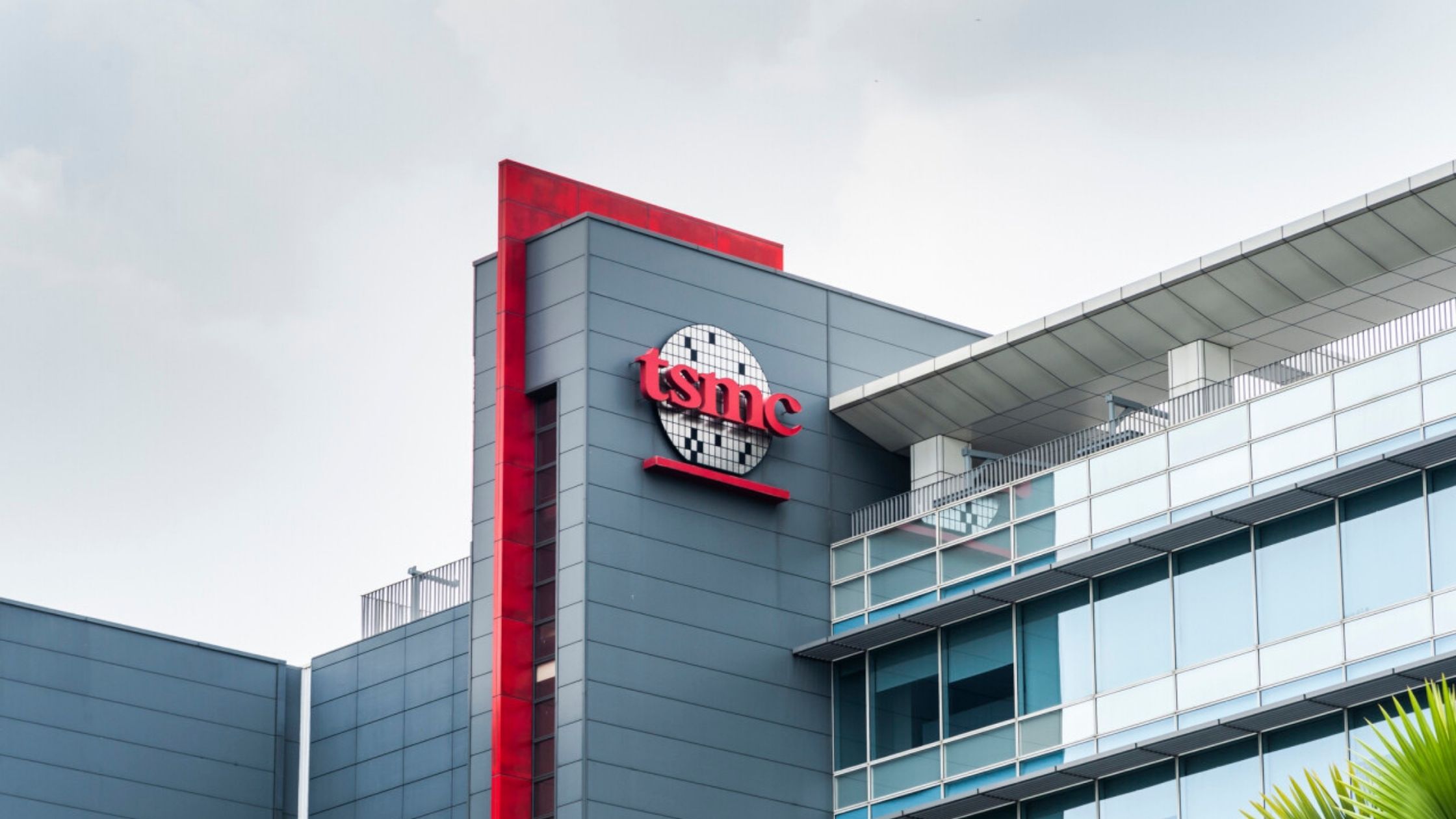
For the seventh consecutive year, Taiwan Semiconductor Manufacturing Co. (TSMC), the world’s largest contract chipmaker, took the top spot among patent applicants in Taiwan. The latest figures just in are for 2022, and TSMC filed a total of 1,534 applications, which was actually a 21% drop from 2021. All of TSMC’s patent applications were for invention patents. Last year, the total number of invention patent applications stood at 50,242 cases, which was a 10-year high. Of the foreign applicants, US-based semiconductor equipment supplier Applied Materials Inc. last year was Taiwan’s largest patent seeker, filing 881 applications comprising 847 invention patents, 2 utility model patents and 32 design patents. Qualcomm dropped from first to second place with 763 applications, which was 10% lower than 2021. South Korean conglomerate Samsung Electronics Co. took third place in the foreign applicants’ rankings with 675 applications, an increase of 30%, followed by Japan-based semiconductor supplier Tokyo Electron Ltd. with 487 applications. Most of the foreign patent applicants were from the semiconductor, information technology and chemical industries. Categorized by country, Japan held the top spot with 13,128 applications, the US was second with 8,517 and China third with 4,424. Amongst local applicants, PC brand Acer was second last year with a total of 530 patent applications, which was an increase of 15%. Third was flat panel maker AUO Corp. with 505, up 7% and ahead of smartphone IC designer MediaTek Inc. with 412 applications in fourth position. It should be noted that Hon Hai Precision Industry Co. was not in the leading ranks of applicants because a lot of its research and development is done overseas, with the US accounting for 30% of its applications, Japan 30%, China 20% and Taiwan 10%.
Taiwan Amends Patent Examination Guidelines
The Taiwan Intellectual Property Office issued amendments to the Patent Examination Guidelines on November 8, 2022, and they came into force on December 1, 2022. Here are two of the highlights:
- To change the name of the inventor after the initial application has been filed, under the current patent examination practice, documentary evidence or supporting documents will need to be submitted. The current guidelines state that the submitting entity is unchanged and reasons such as renaming, typographical errors or translation errors are the only acceptable ones. In the new amendments, in the case whereby there are several different applicants belonging to the same entity, a change in designation of an applicant will be acceptable if a factual statement is submitted with supporting documents.
- If the applicant makes an error on the application form which is corrected after the filing, the filing date will be subject to the date that the applicant corrected said error. Also, only three errors are allowed – change of the entity filing a patent application, adding applicants and reducing applicants.
TIPO Announces Amendment to the Enforcement Rules of the Patent Act
The Taiwan Intellectual Property Office announced a draft amendment to the Enforcement Rules of the Patent Act on January 3, 2023. Two of the key points are as follows:
- To determine whether any amendments are made in divisional applications, TIPO shall carefully review whether their subject matter has extended beyond the content of the earlier application as filed. Applicants are required to attach a marked document indicating differences or changes in the application, with added subject matter underlined and deleted subject matter struck through, along with a relevant explanation of any and all alterations made, thus improving efficiency in the examination of divisional applications.
- In accordance with Article 27 of the Patent Act, if a biological material has been deposited in a depository designated by a foreign country in its territory with which Taiwan recognizes the effects of deposits based on reciprocity, and the certificate of deposit issued by said foreign depository is submitted within the time period prescribed, the applicant is exempted from the requirement of making a deposit in Taiwan. Presently, foreign depository institutions that have been reciprocally recognized by Taiwan are international depositary authorities under Article 7 of the Budapest Treaty. These authorities shall issue documents that include certificates of deposit and viability statements, a practice that Taiwan also adopts. In order to promote mutual recognition of biological material deposits between Taiwan and other countries, documents issued by depositories without the status of an international depository authority must include a viability statement.
China’s Supreme People’s Court Releases Draft Interpretation of Handling Criminal Case of Intellectual Property Infringement
On January 18, 2023, the Supreme People’s Court issued the Interpretation on Several Issues Concerning the Application of Law in Handling Criminal Cases of Intellectual Property Infringement. The Interpretation sets thresholds for determining criminal prosecution when the circumstances are serious enough to warrant such action. Article 213 of the Amended Criminal Law states that using the same trademark as the registered trademark on the same commodity or service without the permission of the owner of the registered trademark, if the circumstances are serious, shall be sentenced to fixed-term imprisonment of not more than three years. A fine may be imposed concurrently or solely; if the circumstances are particularly serious, a fixed-term imprisonment of not less than three years but not more than ten years shall be imposed, and a fine shall also be imposed. The Interpretation gives more details as to what is defined as serious and particularly serious circumstances. Firstly, if the amount of illegal income is more than 30,000 yuan or the amount of illegal business operations is 50,000 yuan, it will be considered as serious. Secondly, if found guilty of counterfeiting two or more registered trademarks, and the amount of illegal income is more than 20,000 yuan or the amount of illegal business is more than 30,000 yuan, it will also be considered as serious. When the amount of illegal gains or illegal business operations reaches ten times or more the amount stipulated in the above mentioned regulations, it shall be considered particularly serious circumstances entailing a more serious punishment.
China Boosts Research and Development
The Australian Strategic Policy Institute recently issued a report comparing the research output of various countries after assessing the defense, space, energy and biotechnology sectors. It was found that China now has a lead in 37 out of 44 critical and emerging technologies. Although the U.S. ran a close second in many of the categories, China has benefitted from government funding to surge ahead in high-impact research. The study, funded by the U.S. Department of State, said that in some fields, many of the world’s top 10 research institutions are based in China. The Institute tracked the most-cited scientific papers, which is a method that can indicate the most likely to result in patents. For example, China generated almost 50% of the world’s high-impact research papers about advanced aircraft engines, including hypersonic missiles, which has resulted in China taking the leading edge in the field. In the fields of photonic sensors and quantum communication, China’s research strength could result in it “going dark” to the surveillance of Western intelligence, which has major security implications. The study summarized that China was likely to emerge with a monopoly in 10 fields, including synthetic biology, 5G, electric batteries and nanomanufacturing. The Chinese Academy of Sciences, a government research body, ranked first or second in most of the 44 technologies tracked, which spanned defense, space, robotics, energy, the environment, biotechnology, artificial intelligence, advanced materials and other technologies. Some reliance on foreign research can still be seen in that 20% of the top Chinese researchers were trained in a Five Eyes Country (Australia, Canada, New Zealand, the U.K. and the U.S.). Nevertheless, the U.S. led global research in high-performance computing, quantum computing, small satellites and vaccines. The study concluded by recommending western countries to increase spending on research and favor international collaboration with security allies.
China to Upgrade Status of the China National Intellectual Property Administration
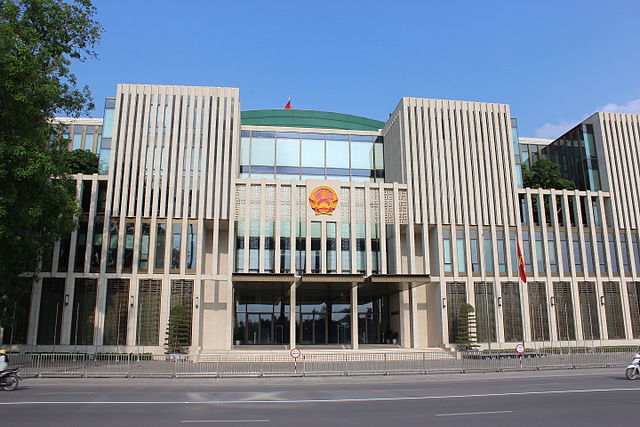
On March 7, 2023, China released the 2023 State Council Institutional Reform Plan. The National People’s Congress (NPC) is set to approve the Reform Plan on March 9, 2023. The Reform Plan will remove the China National Intellectual Property Administration from the State Administration of Market Regulation (SAMR) and make it a top-level agency under the State Council. The SAMR will continue its enforcement of IP rights. According to the Press Briefing, “the levels of creation, utilization, protection, management and service of intellectual property shall be comprehensively improved, and the National Intellectual Property Office administered by the State Administration for Market Regulation shall be adjusted to be directly under the State Council. Law enforcement functions in such fields as trademarks and patents shall continue to be assumed by the SAMR, and the relevant law enforcement work shall be subject to the professional guidance of the CNIPA.” In addition, the Reform Plan proposes reorganizing the Ministry of Science and Technology and establishing a new National Data Administration under the National Development and Reform Commission.